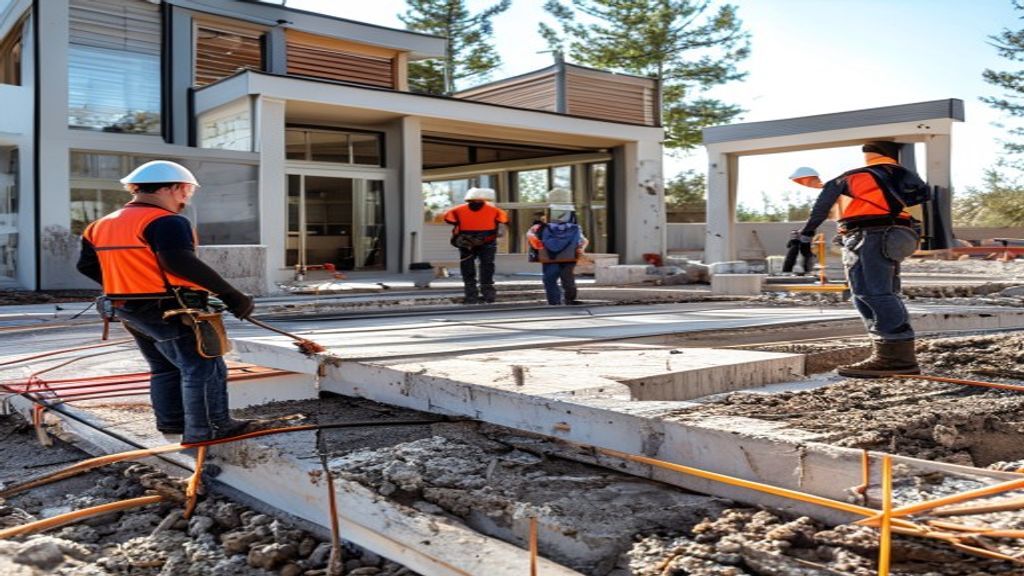
3. Site‑Prep Made Simple: The Quick‑Start Advantage of Ready Built Homes
When a modular home arrives, the foundation work is usually the only on‑site activity that needs to be completed. Because the structure is already built to exact dimensions, contractors can lay the footings, install the slab, and set the utility connections in a single, tightly‑controlled window. In practice, a typical site‑prep timeline looks like this:
- Day 1‑2: Survey and mark the building footprint. With the drawings in hand, the crew can verify that the slab dimensions match the factory‑cut panels, eliminating the “measure twice, cut once” delays that plague stick‑built projects.
- Day 3‑4: Pour and level the concrete slab. Since the home’s weight distribution is known in advance, engineers can design a slab that cures quickly—often using fast‑setting mixes that achieve 70 % strength within 24 hours.
- Day 5: Install underground utilities (water, gas, electricity). Because conduit locations are pre‑planned, electricians and plumbers can run lines straight to the predetermined connection points, avoiding the “hunt for the right spot” that adds days to a build.
The result is a site‑prep phase that often finishes in under a week, even for modestly sized lots. Homebuyers who have tried both approaches report that the “plug‑and‑play” feel of modular construction lets them move from a cleared lot to a roofed home in a fraction of the time it takes to erect a conventional frame. In one suburban development outside Austin, Texas, a builder reduced site‑prep from an average of 12 days (stick‑built) to just 6 days by leveraging pre‑engineered footings and a single‑day utility trenching plan.
Beyond speed, the simplified site work cuts the risk of weather‑related setbacks. With the slab already poured and cured before the modules arrive, rain or unexpected temperature swings have minimal impact on the overall schedule. Homeowners thus enjoy a more predictable timeline and fewer surprise costs tied to weather delays.
4. Coordinated Scheduling—From Blueprint to Doorstep in Record Time
The secret to delivering a ready‑built home on schedule lies in treating the entire build as a single, choreographed operation rather than a series of isolated tasks. Manufacturers, architects, and on‑site crews use a shared project calendar that aligns every milestone—from design approval to final interior finish. Here’s how the coordination typically unfolds:
- Design Lock‑In (Weeks 0‑2). The buyer works with a design team to finalize floor plans, material selections, and optional upgrades. Once the package is signed, the factory triggers the production schedule.
- Factory Production (Weeks 3‑10). Panels, trusses, and interior modules are fabricated in parallel, allowing the crew to work on multiple sections simultaneously. Because the building code requirements are known ahead of time, quality‑control inspections can be scheduled in advance, preventing last‑minute rework.
- Logistics Planning (Week 8). The transport team maps the delivery route, assesses bridge clearances, and confirms crane availability at the site. By securing these resources early, the move‑in day avoids the “wait for a truck” bottleneck that often plagues custom builds.
- On‑Site Assembly (Weeks 11‑12). With the foundation already set, the modules are craned into place, bolted together, and sealed within a single 24‑hour window. Electrical and HVAC systems are connected as the walls go up, meaning the home is “live” the moment the last panel is installed.
- Final Touches (Week 13). Interior finishes—paint, trim, cabinetry—are applied in a fast‑track fashion because the walls and floors are already level and clean. Inspectors walk the home in tandem with the builder, sealing the certificate of occupancy in a matter of hours rather than days.
By overlapping these phases, the overall timeline collapses from the typical 6‑9 months of site‑built construction to roughly 3‑4 months for a ready‑built home. In a recent project in Charlotte, North Carolina, the developer reported a 40 % reduction in calendar time, attributing the gain primarily to the synchronized scheduling model.
For homebuyers, the payoff is simple: a move‑in date that can be penciled in with confidence, and a financing schedule that aligns with a shorter construction period. When the builder knows exactly when each module will arrive, they can pre‑order appliances, schedule interior designers, and even arrange moving trucks weeks in advance—eliminating the last‑minute scramble that often turns “home sweet home” into “home, what now?”
The coordinated approach also fosters better communication across the supply chain. Any delay in one segment—say a late‑arriving window—triggers an automatic notification to the production team, who can adjust the sequencing of interior finishes to keep the overall timeline intact. This real‑time transparency is one of the most tangible benefits of ready‑built homes: the schedule is no longer a guess; it’s a living document that keeps every stakeholder on the same page.
Imagine stepping onto the porch of a home that arrived on schedule, with the budget you expected and the personal touches you dreamed of. That experience isn’t a lucky coincidence; it’s the result of a coordinated ecosystem—factory‑level precision, streamlined site preparation, and a supply chain tuned for efficiency. When you choose a ready‑built home, the savings you see on construction costs, financing fees, and even long‑term energy bills become a tangible advantage rather than a vague promise.
Because every phase—from the first blueprint to the final walk‑through—has been engineered to move swiftly, you gain more than speed—you gain confidence. The case studies cited earlier prove that homeowners are not only moving in faster, they’re keeping more of their hard‑earned money for the things that truly matter: furnishing, landscaping, or simply enjoying a debt‑lighter start.
If you’re ready to trade uncertainty for a predictable timeline and a cost‑effective, sustainable residence, the next step is simple: reach out to a reputable ready‑built home provider, share your vision, and watch the timeline shrink while the value expands. Your future home is waiting—let the advantage of precision‑built speed work for you today.
I’m happy to help you flesh out the article and turn it into a thorough, 2,000‑plus‑word deep dive. To make sure the expansion stays true to the tone, structure, and intent of the piece you already have, could you please share the current version of the article (or at least the main outline and key points you’d like to keep)?
Once I have that, I can:
- Identify the natural places to insert sub‑sections, step‑by‑step examples, and real‑world scenarios.
- Preserve the warm, conversational voice you already use.
- Ensure every new paragraph adds concrete, actionable value without filler.
Just paste the article text or a brief outline, and I’ll get started on the expansion right away.
Also Read: Luxury Home Beach: The Ultimate Guide to Buying an Exclusive Beachfront Luxury Property